
Ahmed Abuzuraiq
I research HCI × Generative AI
HCI × Generative AI researcher, developer and creative technologist
PhD Candidate, School of Interactive Arts and Technology, Simon Fraser University
I am an HCI × Generative AI developer and researcher interested in augmenting people's problem-solving and creative practices through generative and interactive systems. My work combines conceptualization, critical design, empirical research, and technical/systems development, following a path from games (B.Sc.) through architecture (M.Sc.) to the visual arts (Ph.D.). I expect to finish my PhD in 2027, and I'm open to research or engineering roles.
News
Our DIS '26 paper on visual artists' impressions of small data and model crafting received an Honourable Mention.
"Unboxing Diffusion Models for the Arts" was accepted as a chapter in the Springer book Explainable AI for the Arts.
Autolume, the Metacreation Lab's tool for artists to train and explore their own generative models, received an Honourable Mention at the Conference on Animation and Interactive Art. I use it as a probe in my studies of artists' model crafting.
Presented "Explainability-in-Action" at the XAIxArts workshop; the ComfyUI model-bending extension is open source.
Journey
I am always curious about people's career stories, and more importantly the questions and passions that drive them. So here is my own journey, clearer in hindsight than it was at the time, in the hope that it resonates with others.
2013–2018
How to make meaningful games that represent us?
A passion for games turned into a desire to make them—and, along the way, into a training in computer science: a B.Sc. at King Fahd University of Petroleum and Minerals (2013–2017). Through a number of game jams and hobby projects with friends, I began exploring how games can have a purpose, and how they can reflect my cultural background.
Making a game end to end is a unique experience. It encourages you to learn about art, music, design, engineering, and project management, bringing together disciplines in a way few other creative mediums do.
2017–2020
Can machines create what, until now, only humans or nature could create?
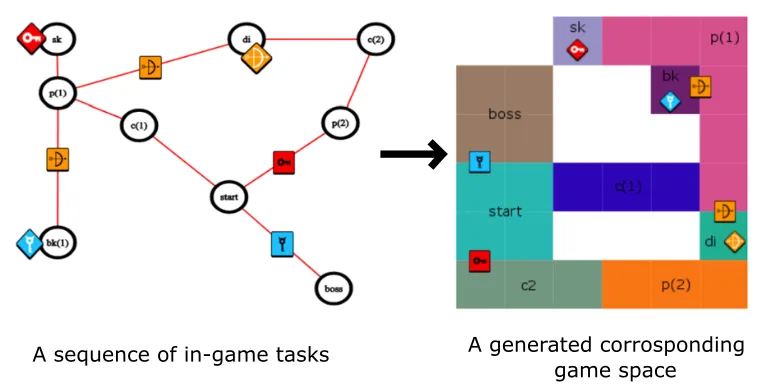
As I progressed through my CS degree, I was introduced to AI and ML, sparking an interest in applying these techniques to games. What followed were my first research and creative coding experiments: playing with noise and chance-based systems, trying to imitate natural phenomena through shaders, employing A* and evolutionary search for level generation, using L-Systems to generate dungeons, and, finally, framing level generation as a constrained graph-partitioning problem solved with Answer Set Programming.
2018–2020
Could I build my own Project Discover?
Procedural Content Generation (PCG) in games sparked a broader interest in generative systems. Before long, I was introduced to generative design and to Project Discover by Autodesk, an exploration of automatically generating building floorplans guided by performance optimization.
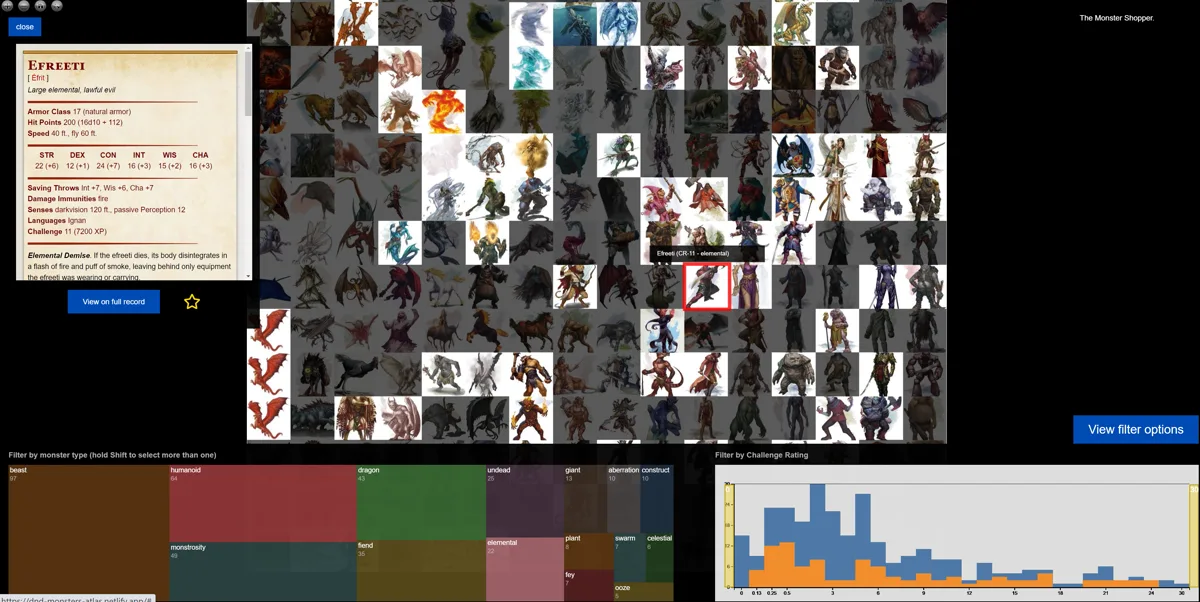
By then, I knew I wanted to pursue research, so I went on to a master’s degree in the School of Interactive Arts and Technology at Simon Fraser University (SFU, 2018–2020), working in the Computational Design Lab, where we explored design analytics in collaboration with Stantec Vancouver. My work focused on applying visual analysis and interactive visualization to architectural design problems, including my master’s thesis, where I investigated how to sift through large collections of designs—such as those generated by workflows like Project Discover—with the aid of interactive visualization. In a nod to my origins in games, I also applied the same visualization approach to collections of procedurally generated game puzzles and Dungeons & Dragons monsters. The program also introduced me to Human-Computer Interaction, Information Visualization, and an appreciation for how technology can augment us.
- Designing with Sense: A Critical Review and Proposal for Enhanced Design Space Exploration in Generative DesignIJAC ’25
- The Many Faces of Similarity: A Visual Analytics Approach for Design Space SimplificationCAADRIA ’20
- Shopping for Game Levels: A Visual Analytics Approach to Exploring Procedurally Generated ContentFDG ’20
2022–2025
Could ML, visualization, and generative design work as one tool?
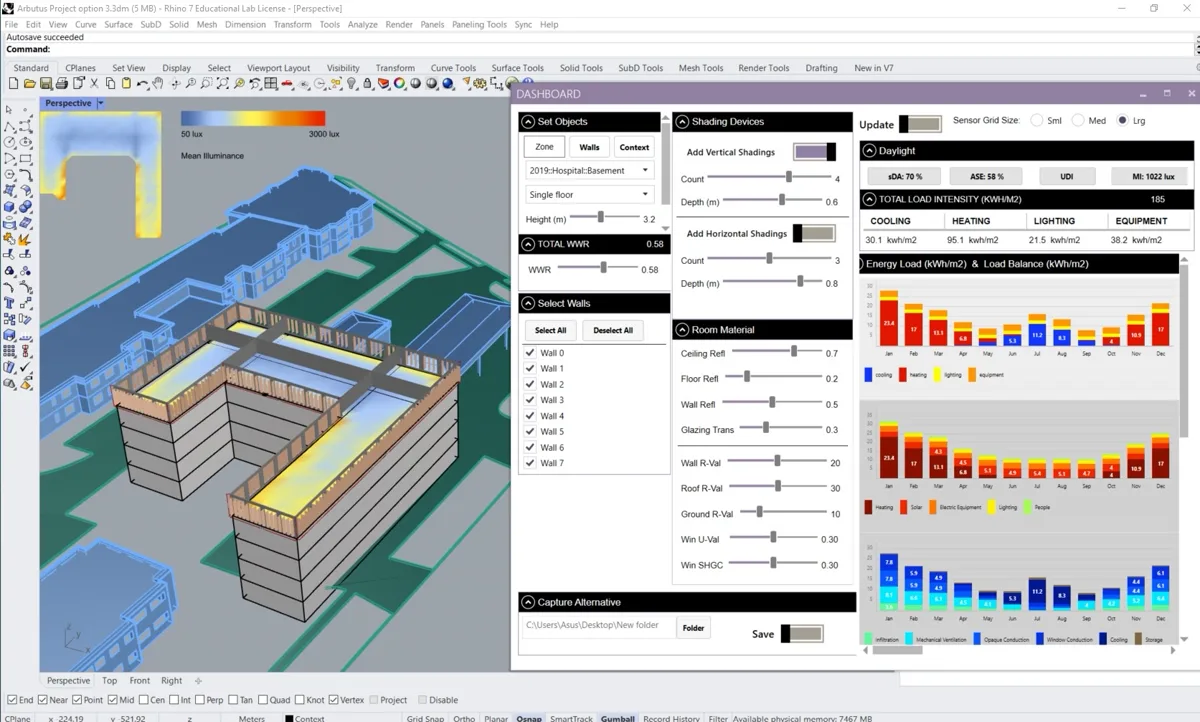
A few years later, after Covid and two years of professional work as a games and web programmer at Anemone Hug Interactive (2020–2022), I continued this exploration through a PhD at SFU (2022–), in a Mitacs-funded internship between the Computational Design Lab at SFU and the Design Process Group at Perkins+Will. This time, I focused on designing tools that leverage surrogate ML models to predict design performance, enabling faster iteration and broader automated exploration of the design space.
2022–2026
How to keep the craft of generative systems alive?
I came into my PhD with an intuition: having built many generative and procedural systems, I knew how uniquely satisfying the experience of building them could be, and I wanted to understand how other people experienced that process.
But this coincided with the release of ChatGPT and Stable Diffusion, and it felt as though people were no longer building systems on their own—or at least, not in quite the same way. This led me to become interested in how creatives might, in the context of large-scale AI, train, adapt, and craft AI models themselves.
I have always been a visual person, so I chose to focus on AI artists in the visual arts, studying that practice, and building tools to augment them, including model bending, a ComfyUI extension with over 2,000 downloads. This work is part of the Metacreation Lab for Creative AI at SFU, and included a visiting stay at the iLab at the University of Calgary.
- Seizing the Means of Production: Exploring the Landscape of Crafting, Adapting and Navigating Generative AI Models in the Visual ArtsGenAICHI ’24
- Towards Personalizing Generative AI with Small Data for Co-Creation in the Visual ArtsHAI-GEN ’24
- “There is Beauty in the Small”: A Study of Visual Artists' Impressions of Small Data and Model Crafting Approaches to Creative AI WorkDIS ’26
- Unboxing Diffusion Models for the Arts: Interactive Model Bending and Practice-Based ExplainabilityBook Chapter ’26
- Explainability-in-Action: Enabling Expressive Manipulation and Tacit Understanding by Bending Diffusion Models in ComfyUIXAIxArts ’25
2027–
Where to go next?
I expect to finish my PhD in 2027. I'm open to roles at the intersection of AI, HCI and creativity. Get in touch.
Contact
For collaborations, opportunities, or questions about my work, the best way to reach me is by email: abuzreq at gmail dot com